FAQ
FREQUENTLY ASKED QUESTIONS
UNDERSTANDING THE PROJECT
What is a data centre?
A data centre is a secure building that houses computer servers, data storage and the equipment that connects them to the internet.
Everyday services depend on them, including banking, phone and internet networks, and health records.
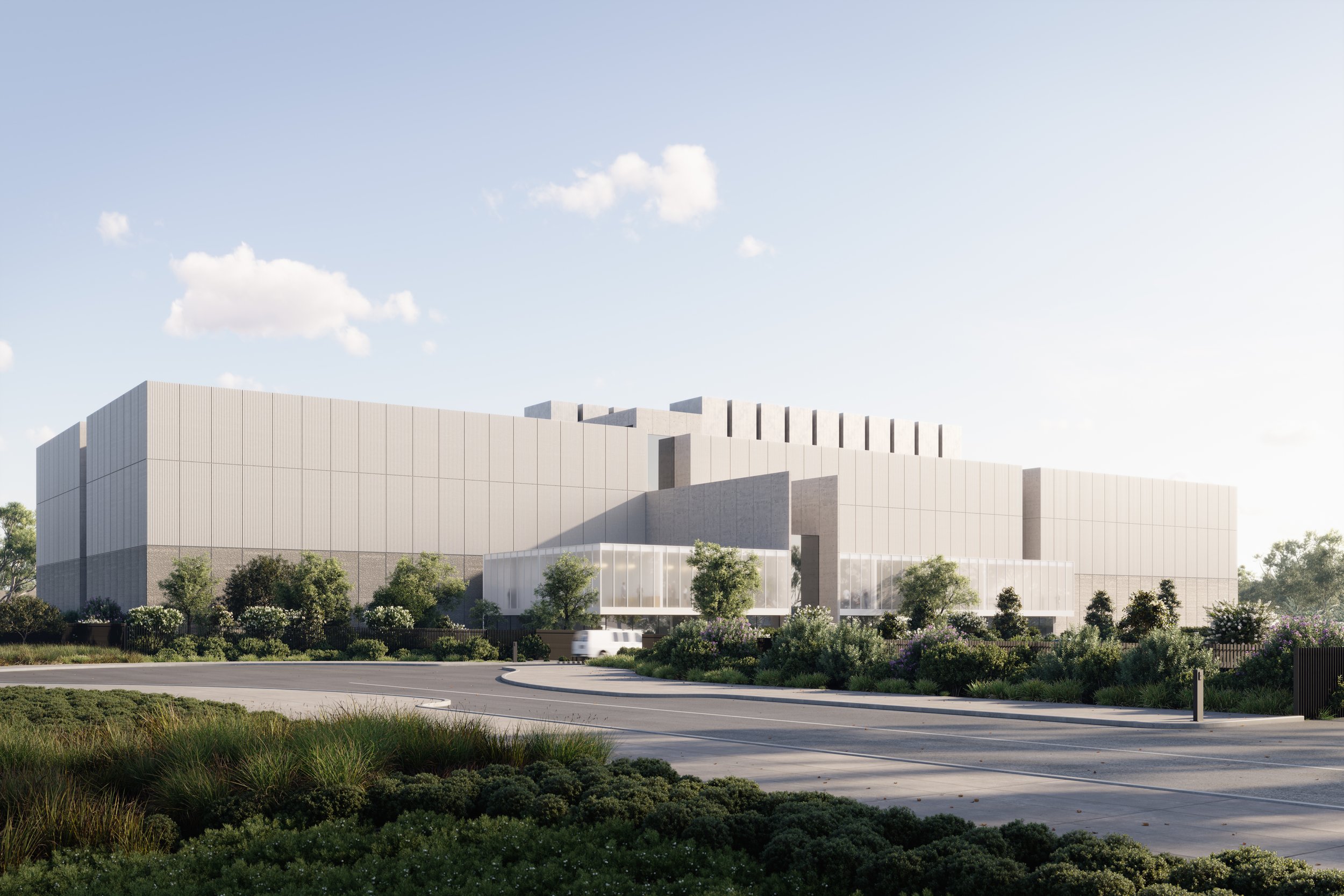
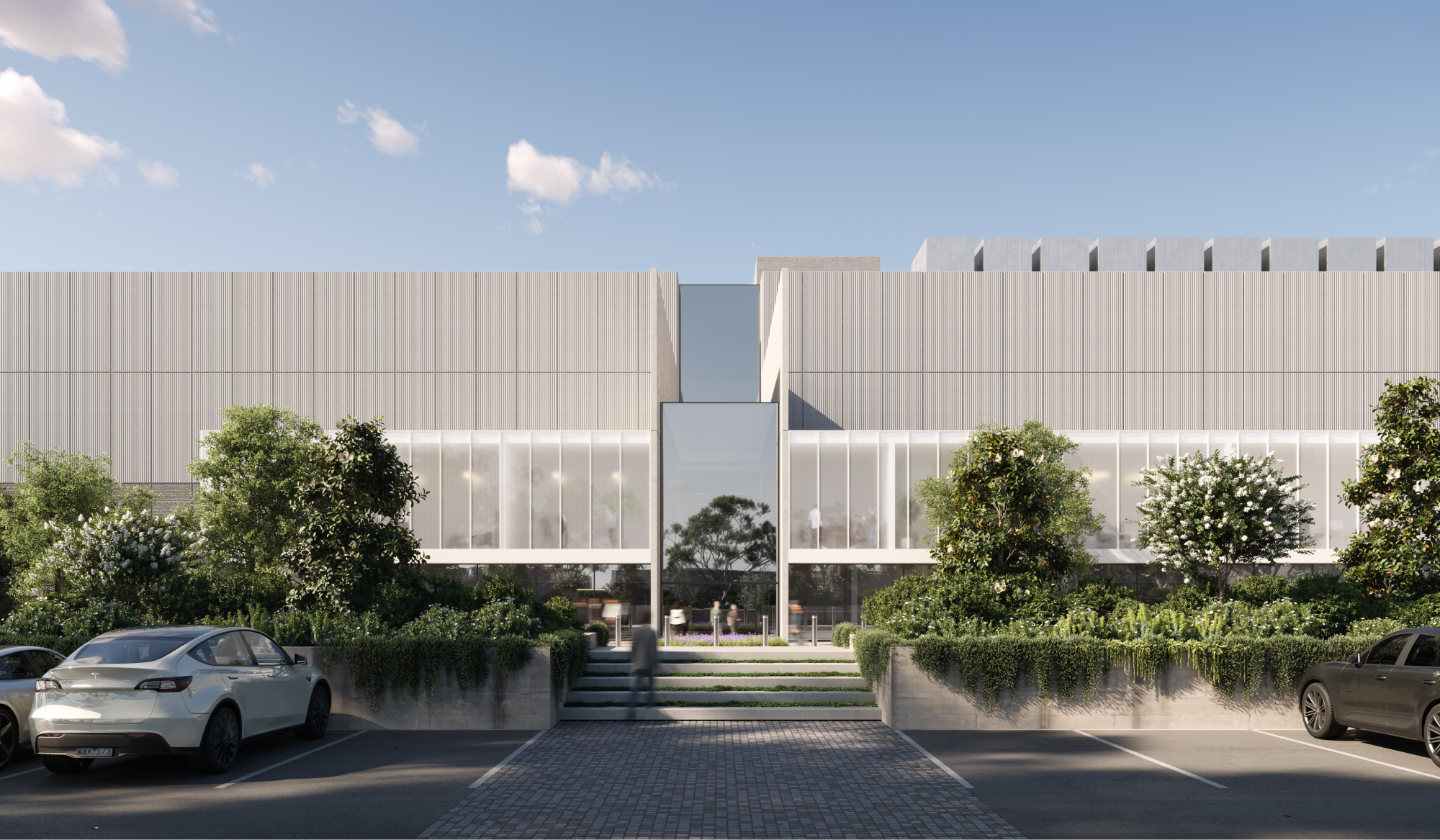
From the outside, the South Morang data centres will look like modern industrial warehouses.
What is the South Morang Data Centre Project?
The project is two data centres on separate sites in South Morang, in Melbourne’s north:
SM1A at 7 Oleander Drive
SM1B at 165 Williamsons Road
Dover DC is the project's development partner and leads the development on behalf of the project group.
Why has this location been chosen?
The project benefits from proximity to the South Morang Terminal Station, a major hub on Victoria’s high-voltage electricity network.
The SM1B site sits right beside the terminal station, providing significant advantages for the grid.
AusNet, which operates the terminal station, identified it in 2024 as one of the best places in Victoria to connect large new electricity loads such as data centres.
Being next to the terminal station means:
The electricity capacity the project needs already exists, so there is no costly upgrade of the wider network required
The connection runs from the terminal station boundary straight to the site, with no new poles and wires through local streets.
What is the planning status of the project?
SM1A has planning approval. The Minister for Planning granted permit PA2402997 in September 2024.
SM1B is being assessed through the Victorian Government’s Development Facilitation Program (DFP). Under the DFP, the Minister for Planning decides the application.
Dover DC lodged SM1B with the DFP in July 2025 (PA2604586). Since then the proposal has been refined through detailed site planning, specialist studies and discussions with the authorities that must be consulted.
The planning permit application was lodged in August 2026.
The proposal is currently on public notice and interested parties are encouraged to make submissions at the following link.
How can I have my say on SM1B?
While a proposal is on public notice, anyone can make a submission. Submissions go to the Department of Transport and Planning, which assesses the application and advises the Minister.
The public notice period for SM1B runs until 10 November. Submissions can be made at the following link.
ENERGY
How much electricity will the project use?
SM1A is designed for up to 120 megawatts (MW) of capacity and SM1B for up to 200 MW.
Both are designed to use electricity as efficiently as possible. The early design target is a power usage effectiveness (PUE) of 1.2.
PUE compares a data centre’s total electricity use with what the output it provides. The closer to 1.0, the less wasted energy. A PUE of 1.2 is considered very efficient.
Will the project affect my electricity supply?
The project connects at transmission level, directly to the terminal station. It does not draw on the local distribution network that supplies homes and businesses.
The terminal station has spare high-voltage capacity, more than most other terminal stations in Victoria.
It has been identified as a suitable location for large loads for that reason: it can take them without affecting other electricity users.
Connecting the project needs no significant upgrade of the wider network, and nothing changes in local streets. No power poles need to be replaced or enlarged.
Who pays for the grid connection?
The project pays the full cost of connecting to the grid. Electricity customers pay nothing.
AusNet will design, build, operate and maintain the connection works. The project will repay AusNet over 20 years, covering both the capital cost and the ongoing operating costs.
How will the project connect to the grid?
Two underground 220 kilovolt (kV) cables will run directly from the terminal station to the site, so no power poles in surrounding streets need to be replaced or enlarged.
Dover DC has worked closely with VicGrid, the Victorian Government agency that plans the state’s transmission network, and is completing the modelling studies needed for the connection application.
Will the project use renewable energy?
Dover DC is in advanced discussions with a leading Australian clean energy company about a zero-emissions energy partnership.
Under that partnership, the project’s electricity would come from long-term clean energy contracts, known as power purchase agreements.
Dover DC is also talking with other renewable energy developers about further agreements.
The data centres’ customers may also bring their own clean energy contracts. Together, these arrangements are intended to ensure the project meets the relevant state and Commonwealth standards for renewable energy.
Why do data centres have backup generators?
Backup generators keep the data centre running if the grid fails, protecting the services that depend on it.
The generators run only during a grid outage and for scheduled maintenance testing.
They are designed to run on hydrotreated vegetable oil (HVO), a renewable diesel made from vegetable oils and waste fats. When sustainably sourced, HVO produces lower emissions than conventional diesel.
WATER AND COOLING
How will the data centres be cooled, and how much water will they use?
The data centres use water-cooled chillers and cooling towers. The design target is less than one litre of water for every kilowatt-hour of electricity used.
The water strategy was developed with Yarra Valley Water and supports its demand management goals, including reducing demand at peak times on the network’s busiest days.
Will the project use recycled water?
Yes, once it is available. The design allows recycled or other non-drinking water to be connected as soon as supply reaches the site.
This is consistent with Victorian Government policy for large non-residential water users.
Discussions with Yarra Valley Water are continuing, including on the planned upgrade of the Wollert recycled water treatment plant.
How will stormwater and flooding be managed?
The project meets Melbourne Water’s requirements and has been tested against its flood modelling.
Both sites have stormwater management plans and incorporate water sensitive urban design.
As part of the project, Heath’s Court Drain is being upgraded, including a new in-ground retention area. This will improve drainage for the surrounding area.
NOISE AND AIR QUALITY
Will the data centres be noisy?
Both data centres are designed to meet every noise limit set by the Environment Protection Authority (EPA) Victoria, during construction and once operating.
For SM1B, the design includes:
A 12-metre noise barrier along the northern side of the site
Enclosures and sound-dampening around plant and equipment
On this basis acoustic engineers modelled the noise the site would make under a deliberately worst-case scenario and the modelling confirmed the project meets EPA limits and the noise objectives in Victoria’s Environment Reference Standard, which sets the state’s benchmarks for noise, air and water quality.
How often will backup generators be tested?
Testing is expected monthly and only during the EPA’s daytime hours (7am to 6pm on weekdays; shorter hours on weekends).
Only a limited number of generators will be tested at any one time, to keep noise down. All testing must meet the same noise limits that apply to everyday operation.
Will the project affect air quality?
Backup generators run only during grid outages and routine testing. For most of the year they produce no emissions at all.
Dover DC is working with the EPA on air emissions. A detailed air emissions assessment will be submitted to the EPA as part of the application for an EPA development licence. The EPA development licence is a requirement for prescribed development activities such as the construction or installation of plant or equipment like backup generators.
How do I make a noise complaint?
A formal complaints process will be in place before the data centres begin operating, and residents will be told how it works.
Until then, contact the project team at info@doverdc.com.au.
CONSTRUCTION AND ENVIRONMENT
How will construction impacts be managed?
A detailed construction management plan will be prepared before work starts. It is expected to be a condition of the planning permit, which means Dover DC must follow it.
For SM1B, Dover DC has already committed in its application to:
Meeting the EPA’s construction noise requirements and working only during standard construction hours
A construction environmental management plan covering stockpiles, wash-down areas, erosion and sediment control, weed hygiene and no-go zones for sensitive areas.
What impact will the project have on local traffic?
Traffic impact assessments have been completed by specialist traffic engineering consultants. These assessments confirm that the proposed development is not expected to have a significant impact on the operations of the surrounding road network.
What impact will the project have on vegetation?
Dover DC assessed more than 3,500 possible sites before securing an environmental offset site for SM1B to conserve the specific type of vegetation found on the SM1B site.
Approvals for the SM1B offset are progressing with the state and Commonwealth environment departments.
At SM1A, the protected trees along the McDonalds Road frontage will be kept.
Both sites have detailed landscape plans that include significant new tree planting.
Is there an approved Cultural Heritage Management Plan?
Yes. A Cultural Heritage Management Plan has been approved for each site by the Wurundjeri Woi-wurrung Cultural Heritage Aboriginal Corporation.
A Cultural Heritage Management Plan sets out how Aboriginal cultural heritage on a site will be identified and protected. It must be approved before work can start.
COMMUNITY AND STAKEHOLDER ENGAGEMENT
How can I stay informed or ask a question?
Dover DC has kept the community informed through:
a dedicated project page on the Dover DC website
a letterbox drop to surrounding residents in September 2026, with an offer of follow-up meetings with the project team
meetings with government, the City of Whittlesea and local community groups.
To stay informed in relation to the project, please refer to the dedicated project page on the Dover DC website [insert link] for updates.
To ask a question, please contact us at info@doverdc.com.au.
What does the project mean for jobs and the local economy?
Independent economic analysis estimates more than 750 direct construction jobs across the two sites, and more than 200 direct ongoing jobs once the data centres are operating.
SM1B alone represents initial capital investment of over $2.6 billion.
The project also delivers local improvements that would not otherwise happen, including the Heath’s Court Drain upgrade and amenity improvements on McDonalds Road.